Kilita Safaris
Questions to read before you book
One page for each question. The cream background, orange labels, and white cards are the same design as the homepage. The homepage itself is unchanged.
Tanzania safari
Tanzania safari
Tanzania safari
Budget the trip as three layers: the safari price, the extras that sit outside it, and your personal spending. On Kilita's published joining and private cards, a 3-day...
Read the answer
Tanzania safari
The best value is the shortest route that still reaches the wildlife you came for, in the accommodation you will actually sleep well in. For many first trips that is a...
Read the answer
Tanzania safari
Three days can show you wildlife. It cannot show you the whole northern circuit without rushing. A workable 3-day shape is Tarangire or Lake Manyara, the Ngorongoro...
Read the answer
Tanzania safari
A local company such as Kilita Safaris plans the trip from Moshi and Arusha, with guides who drive these parks every week. An international seller often packages the...
Read the answer
Tanzania safari
Choose a joining group if you are one or two people, you are comfortable with shared stops, and the lower per-person rate matters. Choose a private vehicle if you are...
Read the answer
Tanzania safari
For a first safari, start with Tarangire, the Ngorongoro Crater, and one part of the Serengeti. Tarangire is the easiest introduction: elephants, baobabs, and a shorter...
Read the answer
Tanzania safari
Before you pay, the quote should name the dates, the parks, the vehicle type, the place you sleep each night, and what the price includes. It should also say how much...
Read the answer
Tanzania safari
Yes. An affordable northern safari still includes the Serengeti and the Ngorongoro Crater if you camp, share a vehicle, and skip extra parks. Kilita's 3-day Serengeti...
Read the answer
Tanzania safari
Five to seven days is the range that feels complete for a first northern safari. Three days works if you only want the Serengeti and the crater. Four days adds...
Read the answer
Tanzania safari
The costs that surprise people are the ones left off the headline price: Ngorongoro crater service fees, drinks, visas, tips, travel insurance, and the flight into...
Read the answer
Serengeti and Ngorongoro
Serengeti and Ngorongoro
Serengeti and Ngorongoro
There is no single best month. The herds use the short-grass plains in the south from about January to March, move toward the western corridor around May to July, and...
Read the answer
Serengeti and Ngorongoro
Choose the region the herds are using in your month, unless you care more about general wildlife than the migration. South and Ndutu suit January to March. The centre...
Read the answer
Serengeti and Ngorongoro
Three days is enough to see the Serengeti properly in one region. It is not enough to see the south, the centre, and the north. A useful pattern is an afternoon arrival,...
Read the answer
Serengeti and Ngorongoro
Camping means a tent, usually at a public or special campsite, with a crew that sets up camp and cooks. A lodge or tented camp means a fixed room, a bed, and a bathroom....
Read the answer
Serengeti and Ngorongoro
Yes. That pairing is the core of most northern safaris. The crater is a long morning drive. The Serengeti needs its own nights. A common order is Serengeti first, then a...
Read the answer
Serengeti and Ngorongoro
On a budget camping safari you stay in a campsite inside or just outside the park sector you are visiting, not in a lodge room. Public campsites have shared wash blocks....
Read the answer
Serengeti and Ngorongoro
The crater is a concentrated game drive. Visitors commonly see lions, elephants, buffalo, zebra, wildebeest, hippos, and hyenas. Black rhino live on the crater floor....
Read the answer
Serengeti and Ngorongoro
Yes, if the short safari has a morning for it. The crater is the most reliable single wildlife site on the northern circuit, and it sits on the road between the...
Read the answer
Serengeti and Ngorongoro
The migration decides where your Serengeti nights should be. It does not decide whether the park has wildlife. Resident lions, elephants, and plains game are in the park...
Read the answer
Serengeti and Ngorongoro
The practical order from Moshi or Arusha is Tarangire first, then the Serengeti, then Ngorongoro on the way back. Tarangire is the closest of the three to the start. The...
Read the answer
Safari accommodation
Safari accommodation
Safari accommodation
Budget camping is a mobile camp or a public campsite, a shared vehicle on the joining rate, and meals cooked by the crew. A midrange lodge safari uses fixed lodges or...
Read the answer
Safari accommodation
The private vehicle costs more per person because you are not splitting the car, the fuel, and the guide. On Kilita's cards the gap is visible on every line. A 3-day...
Read the answer
Safari accommodation
A public campsite has pitches, a shared toilet and shower block, and other travellers nearby. It is not a lodge. Hot water can be limited. Electricity is not something...
Read the answer
Safari accommodation
Ask for the name of the property for every night, in writing, on the quote. 'A lodge in the Serengeti' is not a confirmation. A named lodge or a named campsite is. If...
Read the answer
Safari accommodation
Sometimes, and only when the quote says so. Do not assume a headline price includes park fees, the Ngorongoro crater service fee, all meals, or the airport transfer....
Read the answer
Safari accommodation
Yes. The joining rate is the solo traveller's route, as long as the departure has a group. Kilita's 3-day Serengeti camping card for solo travellers joining a small...
Read the answer
Safari accommodation
On a private vehicle the price per person falls as the vehicle fills, up to the seats the car actually has. A couple pays more per person than four friends in the same...
Read the answer
Safari accommodation
Compare the dates, the parks, the Serengeti sector, the name of each night, the vehicle, and the included list. Then compare the price. Two quotes with different crater...
Read the answer
Safari accommodation
Most couples do better in a midrange lodge or a private tented camp than in a busy public campsite, unless they specifically want the camping trip. You get a private...
Read the answer
Safari accommodation
Choose a lodge or a tented camp with family rooms or adjoining rooms, and keep the route short enough that children are not in the car all day. A 5-day family safari...
Read the answer
Kilimanjaro climbing
Kilimanjaro climbing
Kilimanjaro climbing
Kilita's published climbing cards for 2026 start at $1,450 joining or $1,750 private for the 5-day Marangu route, $1,550 joining or $1,850 private for the 6-day Machame...
Read the answer
Kilimanjaro climbing
First-time climbers should look at the 7-day Machame, the 8-day Lemosho, or the 9-day Northern Circuit before the 5-day Marangu or the 6-day Machame. Extra nights are...
Read the answer
Kilimanjaro climbing
Choose Machame if you want the more varied trail and you can camp. Choose Marangu if you want hut accommodation and a shorter, more direct path. Kilita's 6-day Machame...
Read the answer
Kilimanjaro climbing
Yes. Eight days on Lemosho is one of the better first-climb schedules because you walk in from the west and gain height more gradually than on a five-day or six-day...
Read the answer
Kilimanjaro climbing
You need to be able to walk uphill for several hours a day, on consecutive days, with a day pack. You do not need to be a runner or a climber. The porters carry the...
Read the answer
Kilimanjaro climbing
Bring broken-in boots, a warm sleeping bag rated for below freezing, a waterproof shell, warm layers, a sun hat, gloves, and a headlamp. The mountain is hot in the...
Read the answer
Kilimanjaro climbing
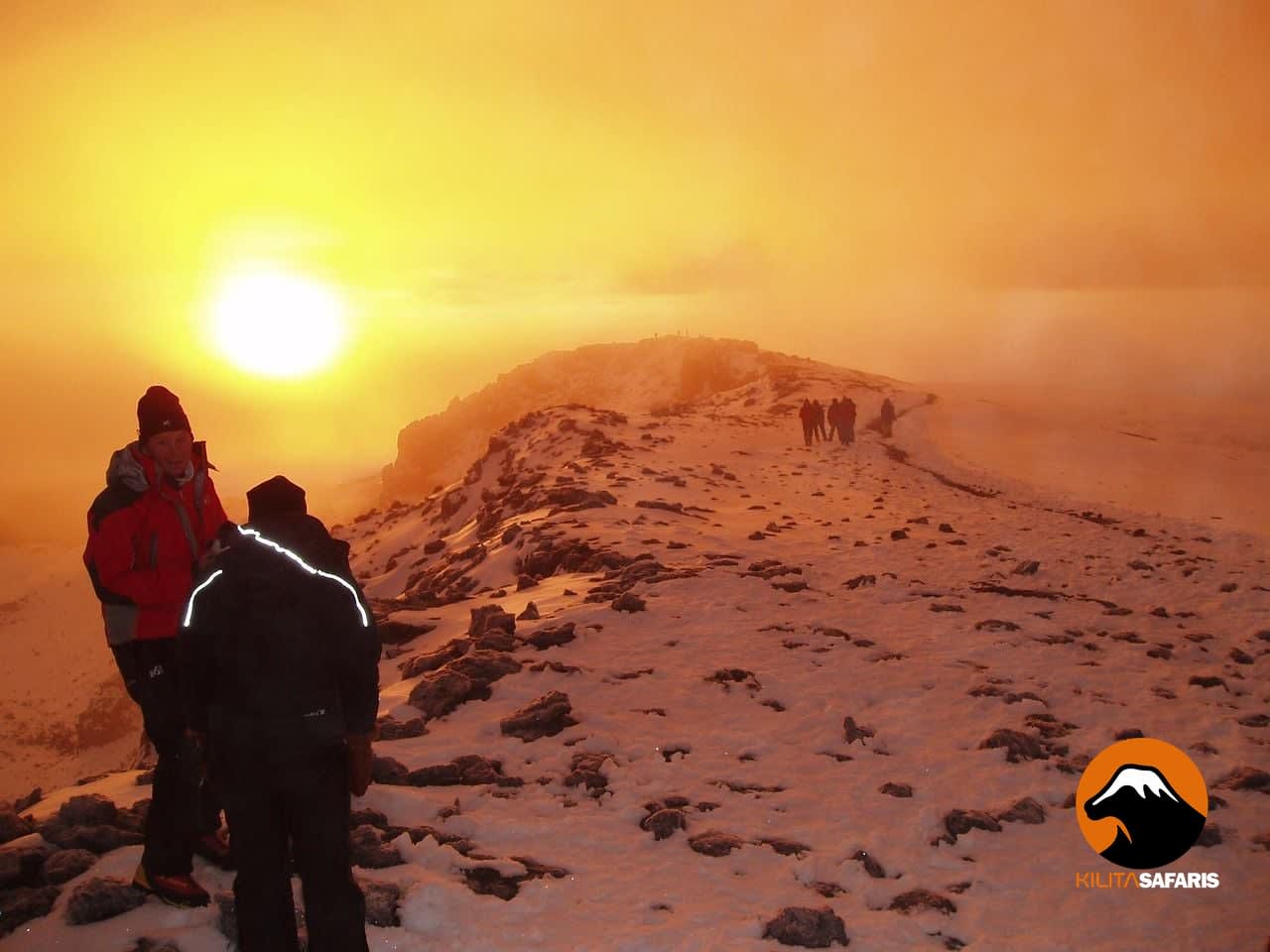
You go to bed early at a high camp, then start the summit walk around midnight. The walk is slow, cold, and several hours long, in the dark, with a headlamp. You reach...
Read the answer
Kilimanjaro climbing
Walk slowly, drink water, and choose a route with more nights. Those are the three things you control. A 7-day, 8-day, or 9-day itinerary is safer for most people than a...
Read the answer
Kilimanjaro climbing
Marangu uses mountain huts rather than tents. You sleep in bunkhouses along the route, which is why people call it the hut route. Space is shared. You still need a warm...
Read the answer
Kilimanjaro climbing
Ask for the porter load limit, the wage, the meals, and what happens if a porter is sick. A responsible crew has a weight limit you can see on the scales at the gate,...
Read the answer
Kilimanjaro preparation
Kilimanjaro preparation
Kilimanjaro preparation
For a first climb, yes. The seventh day is an extra night for acclimatisation, not a sightseeing day. Kilita's 6-day Machame card is $1,550 joining or $1,850 private....
Read the answer
Kilimanjaro preparation
Lemosho starts further west and takes longer to join the route that Machame uses higher up. Machame starts at the Machame gate and is the busier classic path. Both are...
Read the answer
Kilimanjaro preparation
Rongai suits climbers who want the drier northern side and a quieter start. It is a reasonable choice in a wetter month, because the northern approach often holds less...
Read the answer
Kilimanjaro preparation
Expect a very early start, a slow single-file walk, and several cold hours before dawn. The pace is set so people can breathe, not so the group can finish quickly. You...
Read the answer
Kilimanjaro preparation
Give yourself at least eight weeks of regular hill walking if you are starting from an ordinary fitness level. Twelve weeks is more comfortable. If you already hike on...
Read the answer
Kilimanjaro preparation
Pack for three climates. The forest is warm and wet. The moorland is sun and wind. The summit is freezing. You need a waterproof jacket and trousers, a warm fleece, an...
Read the answer
Kilimanjaro preparation
Budget a separate tip fund. It is not included in the climb price, and it is not the crew's wage. The right amount depends on the length of the trek and the size of the...
Read the answer
Kilimanjaro preparation
Yes. Sleeping bags, insulated jackets, trekking poles, and some other bulky items can be rented in Moshi. Boots are a poor rental if you have not walked in them. Kilita...
Read the answer
Kilimanjaro preparation
The check is how missing gloves, a thin sleeping bag, or boots that are still new get fixed in Moshi instead of at the high camp. Kilita does this before departure. It...
Read the answer
Kilimanjaro preparation
Allow at least one full day in Moshi after you come down, and two days if you can. The descent day is not a rest day. People are tired, dusty, and sometimes nursing a...
Read the answer
Moshi day trips
Moshi day trips
Moshi day trips
Stay on the Kilimanjaro side of the region. Materuni waterfall and the coffee walk, Chemka hot springs, Lake Chala, the Marangu cultural visit, and Rau Forest all start...
Read the answer
Moshi day trips
Materuni is a village walk, a waterfall, and a coffee-making visit on the same hillside, close to Moshi. You are not looking at the mountain from a car park. You are in...
Read the answer
Moshi day trips
Yes. Kilita runs that combination as its own card, at $75 joining or $120 private. It is a fuller day than either place alone. You walk at Materuni, spend time at the...
Read the answer
Moshi day trips
Yes. Lake Chala is a crater lake on the Kenya border side of Kilimanjaro, and it is a quieter day than a wildlife park or a busy market. Kilita's card is $50 joining or...
Read the answer
Moshi day trips
The Mandara day hike uses the Marangu trail as far as the first hut and the Maundi Crater viewpoint, then comes back the same day. It is a real uphill walk, not a garden...
Read the answer
Moshi day trips
Around Marangu you can visit a Chagga museum, walk the village paths, and see the underground caves that families used historically, together with a look at how coffee...
Read the answer
Moshi day trips
Walk the town with someone who lives there. The market, a coffee stop, a neighbourhood street, and a meal are the visit. Kilita's Moshi town walking tour is $25 joining...
Read the answer
Moshi day trips
Keep the combination inside Moshi's side of the mountain. A town walk in the morning and Rau Forest, or a short farm walk, in the afternoon is realistic. Rau Forest is...
Read the answer
Moshi day trips
From Arusha, the single days that make sense are Arusha National Park, Lake Duluti, or a long day to Tarangire or Manyara. Arusha National Park, with walking and...
Read the answer
Moshi day trips
Bring shoes with grip, a light rain jacket, sun protection, water, and a little cash. The Materuni and Chemka combination is the full version of this day, at $75 joining...
Read the answer
Travel planning
Travel planning
Travel planning
June to October is the dry season most people choose for wildlife, with easier roads and the northern migration. January to March is excellent on the southern Serengeti...
Read the answer
Travel planning
Book nine to twelve months ahead if you want a specific lodge in July, August, or September, or a particular Kilimanjaro route in those months. Six months is often...
Read the answer
Travel planning
Carry a passport with enough validity for the whole trip, the visa or the approval your nationality needs, and the booking names that match the passport. Yellow fever...
Read the answer
Travel planning
Ask Kilita to meet you at Kilimanjaro International Airport when you book the safari or the climb. The airport is the arrival point for Moshi and Arusha. The drive to...
Read the answer
Travel planning
Yes. Arrive at least one night before the trek, and two nights if the flight lands in the evening or you need to rent gear. The briefing and the kit check happen in...
Read the answer
Travel planning
Buy a policy that matches what you are actually doing. A safari needs medical cover and evacuation. A Kilimanjaro climb needs a policy that includes trekking to 5,895...
Read the answer
Travel planning
Put the climb first, then a rest day in Moshi, then the safari, then Zanzibar. Climbing after a safari can work, but climbing after the beach often means a rushed start...
Read the answer
Travel planning
Ask which parks, which Serengeti sector, where you sleep each night, whether the vehicle is joining or private, and what is excluded. Ask the deposit, the balance date,...
Read the answer
Travel planning
The usual mistakes are booking too many parks, believing a price that names no lodges, leaving no rest after a flight or a climb, and buying international flights before...
Read the answer
Travel planning
If you have one day, stay near your town: Materuni, Chemka, Chala, or a Moshi walk from Moshi, or Arusha National Park from Arusha. If you have three days, do Serengeti...
Read the answer
Zanzibar holidays
Zanzibar holidays
Zanzibar holidays
Finish the safari, spend the night in Arusha or Moshi if you need it, then fly to Zanzibar. Do not drive it as a day trip. Kilita's 5-day safari and Zanzibar card starts...
Read the answer
Zanzibar holidays
Four days and three nights is the balance most people enjoy. Three days works if you only want the beach. Five days gives you Stone Town and a slower coast. Kilita's...
Read the answer
Zanzibar holidays
Fly. The usual pattern is a road transfer from the last park to Arusha or Kilimanjaro airport, then a domestic flight to Zanzibar. A road-and-ferry journey from the...
Read the answer
Zanzibar holidays
Yes, if you have about two weeks. A shorter climb, a rest day, a 4-day or 5-day safari, and three or four nights on Zanzibar is a real holiday. A 5-day Marangu climb...
Read the answer
Zanzibar holidays
A quiet beach, one Stone Town evening, and maybe a spice farm or a dhow trip is enough. Couples rarely need a new excursion every morning after a week of game drives....
Read the answer
Zanzibar holidays
Use a safari card plus an island card, then add the domestic flight, tips, and meals that the island hotel does not include. A 5-day safari and Zanzibar combination on...
Read the answer
Zanzibar holidays
Book the flight after the safari exit is real. You need the town you leave from, the time the vehicle can reach the airport, and a same-day gap. A ticket for noon on the...
Read the answer
Zanzibar holidays
After. You want fresh legs and an unused pair of boots on the mountain, and you want somewhere to sit when you come down. A beach before the climb is pleasant and...
Read the answer
Zanzibar holidays
Keep the safari to five days or so, in a lodge, with a private vehicle, then fly to one beach hotel and stay there. Children gain little from a second safari park if...
Read the answer
Zanzibar holidays
A clean two-week shape is two nights at the start in Moshi or Arusha, six safari nights on the northern circuit, a travel day, and four nights on Zanzibar. If the climb...
Read the answer
AFCON 2027
AFCON 2027
AFCON 2027
Treat the match calendar as the fixed part, then add the Tanzania days in the gaps. Tanzania is a 2027 host together with Kenya and Uganda. Stadiums and kick-off times...
Read the answer
AFCON 2027
Choose a day that gets you back before the match. From Moshi or Arusha that means Materuni, Chemka, a town walk, or Lake Duluti, not a Tarangire day that returns at...
Read the answer
AFCON 2027
Yes, if the safari sits before the tournament or after your last match, with a travel day in between. A same-day Serengeti return is not realistic. Kilita's AFCON...
Read the answer
AFCON 2027
Know which city your match is in, how you will move between host countries if you have tickets in more than one, and which visa your passport needs. Tanzania, Kenya, and...
Read the answer
AFCON 2027
Book the hotel in the match city first. Then ask Kilita for the airport transfer and for any night you want outside that city. Kilimanjaro and mainland airports are not...
Read the answer
AFCON 2027
Add a day hike, not a summit, if the football trip is the reason you came. The Mandara day hike is $160 joining or $220 private. Kilita's AFCON card that includes a...
Read the answer
AFCON 2027
Use the morning of a non-match day for a Moshi town walk, a Maasai village visit, or the Marangu cultural caves, and be back long before the stadium. The town walk is...
Read the answer
AFCON 2027
Budget the football trip on its own, then add a safari only with the days you can prove are free. A short wildlife extension on Kilita's AFCON list is $400 joining or...
Read the answer
AFCON 2027
Leave the island until the day after your last match. Fly from the mainland airport you can actually reach, and give yourself a free evening in the match city first....
Read the answer
AFCON 2027
Confirm that the package is not pretending to include match tickets unless a real ticket is attached. Confirm the city, the hotel name, the airport transfer, and what...
Read the answer
Booking and trust
Booking and trust
Booking and trust
Ask for the company's registered name, the office you can visit or call in Moshi or Arusha, and a quote that names lodges, parks, and a cancellation rule. Check that the...
Read the answer
Booking and trust
A good itinerary has fewer parks, named beds, a realistic driving day, and a price that says what is excluded. A cheap offer has a long list of famous names, 'or...
Read the answer
Booking and trust
Compare the route, the number of days, and the inclusion list. Then look at the year. Kilita's 2027 7-day Machame card is $1,700 joining or $2,000 private. The 2028...
Read the answer
Booking and trust
Ask if the campsite is public or private, who carries the tents, what the wash block is like, and which meals are cooked. Ask whether sleeping mats are provided....
Read the answer
Booking and trust
Expect a deposit to hold the dates, a balance before you travel, and a cancellation rule that gets stricter as the date approaches. The exact days and percentages have...
Read the answer
Booking and trust
A professional quote names the travellers, the dates, the parks, the Serengeti sector, each night's lodge or campsite, the vehicle, the meals, the park fees, the...
Read the answer
Booking and trust
Match the style first. Camping and a joining group suit travellers who like an early start and a shared day. Lodges and a private vehicle suit couples, families, and...
Read the answer
Booking and trust
Prioritise the Serengeti, the Ngorongoro Crater, and one cultural morning you will remember. Tarangire earns a place if you have a fourth day. A Moshi or Maasai visit is...
Read the answer
Booking and trust
Choose the month and the lodging level now, and accept that a 2028 price will be confirmed closer to the year. Kilita's 2028 6-day midrange card is listed at $1,650...
Read the answer
Booking and trust
Consider Kilita if you want the trip planned in Moshi by the people who also run the day trips, the climbs, and the northern safaris. The joining and private prices are...
Read the answer